Setting a budget for your kitchen remodel
A quote can fall short of the real cost when the written scope leaves out permits, labor, appliances, allowances, or conditions uncovered once demolition starts. An itemized quote you can compare side by side tells you more than one target number does.

What you'll learn
- Defining your remodel scope before you ask anyone for a budget
- The quote categories worth comparing, so gaps stand out sooner
- Comparing written quotes and planning for hidden conditions without relying on one standard contingency percentage
Step by step
- Pin down the scope first, then set the budget
Write down what's staying, what's changing, and what you haven't decided yet. A new layout, cabinet construction, finish materials, appliances, utility work, permits, access, and hidden conditions can all shift the quote, so have the contractor price that defined scope in writing.
- Split the quote into categories
When you compare bids, give each of these its own line: design, permits, demolition, carpentry, plumbing, electrical, cabinets, hardware, countertops, appliances, flooring, backsplash, lighting, painting, delivery, disposal, and tax. Splitting the budget that way helps you catch anything a bid leaves out, and it shows where one contractor's allowances differ from another's.
- Allow for changes and hidden conditions
Ask every contractor what their quote assumes, what it leaves out, how allowances work, and how they'll document and price a change order. Then pick a contingency amount that matches how uncertain your project is and what your finances can handle.
- Compare written quotes that spell out the details
Hand every contractor an identical scope and the same selections, then line up their bids side by side. Look at what's included and left out, the allowances, the materials, who handles permits, the schedule assumptions, the warranties, and the payment terms. If two bids differ in a way that matters, ask each contractor to walk you through why before you decide.
Before you sign anything, read the whole written contract: the scope, the payment terms, how change orders work, and the cancellation notices. The California Contractors State License Board offers consumer guidance worth reading alongside it. If any term is unclear to you, ask about it.
Need a contractor to look at your kitchen?
Modern Kitchen San Diego is a referral service. Send us a note with your city and what you’re planning, and we’ll try to match you with an independent kitchen remodeler who works in your area.
Keep learning.
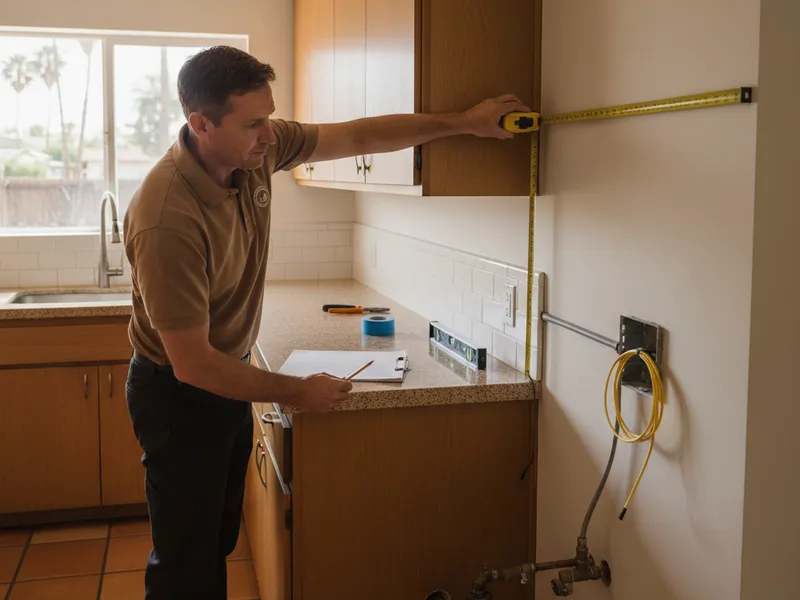
How to plan a kitchen layout
Bring a measured sketch and a list of what can't move, and your first talk with a designer or contractor will get somewhere useful. For aisle and appliance clearances, check with the people who'll actually build the kitchen rather than leaning on a generic rule of thumb.

Choosing the right countertop material
The material you pick shapes how much upkeep the surface needs, how it handles heat and moisture, where the seams fall, and what the installed quote comes to. Look at samples in your own kitchen light, and rely on manufacturer instructions and itemized quotes instead of any one list of best surfaces.

Choosing your cabinet style and finish
The look of your whole kitchen starts with the cabinets. Settle the door profile, box construction, and hardware before you place an order, and you avoid a costly change once fabrication is underway.