Choosing your cabinet style and finish
The look of your whole kitchen starts with the cabinets. Settle the door profile, box construction, and hardware before you place an order, and you avoid a costly change once fabrication is underway.
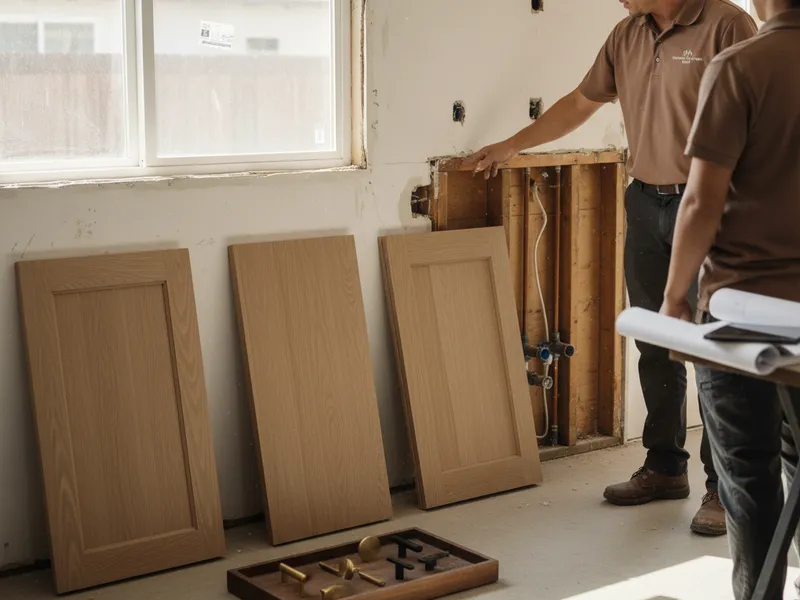
What you'll learn
- Shaker, flat-front and raised-panel: what sets these three cabinet door styles apart
- Comparing cabinet samples beside your countertop and flooring
- How framed and frameless construction change storage space and hardware
Step by step
- Pick a door profile
Look at shaker, flat-front, and raised-panel samples in the room where they'll end up. Before you compare finishes, jot down what affects cleaning, where hardware sits, and the look you're after.
- Choose the box construction
A framed cabinet has a face frame circling the box opening, while a frameless cabinet mounts doors and drawers right onto the box. For the specific lines you're weighing, compare usable interior space, door clearances, construction, hardware, finish, warranty, and the complete installed price.
- Select a finish
For every painted, stained, natural-wood, laminate, or thermofoil sample, ask how it should be cleaned and repaired. Then read the manufacturer's heat and moisture guidance, and look at the warranty and touch-up options for that exact finish.
- Bring cabinet and hardware samples together
In the kitchen, place the cabinet sample beside your countertop and flooring samples. Look at the combination in morning and evening light, and before you order, confirm where the hardware will sit on the actual door style.
Pick your top two choices, order one cabinet door sample of each, and hang them in the kitchen for a week. Because the light in a room shifts through the day, a finish that looks right at noon can look different in the evening.
Need a contractor to look at your kitchen?
Modern Kitchen San Diego is a referral service. Send us a note with your city and what you’re planning, and we’ll try to match you with an independent kitchen remodeler who works in your area.
Keep learning.
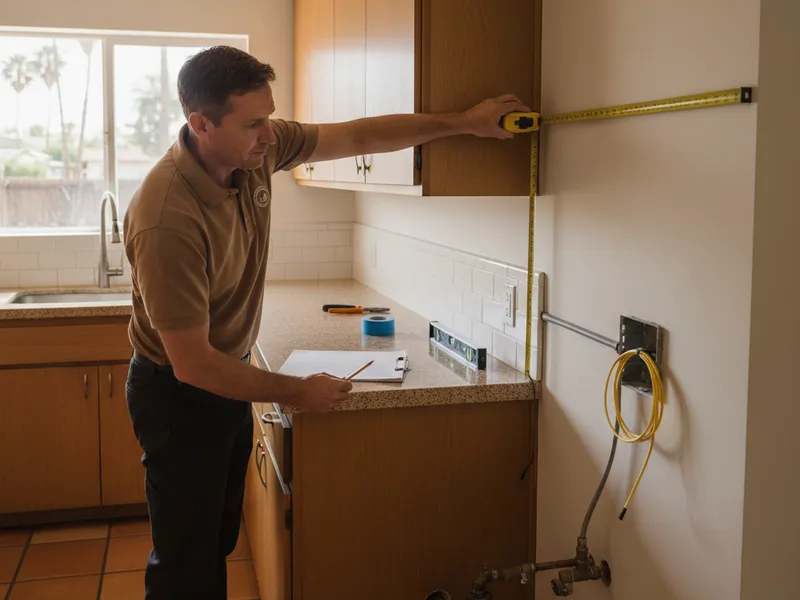
How to plan a kitchen layout
Bring a measured sketch and a list of what can't move, and your first talk with a designer or contractor will get somewhere useful. For aisle and appliance clearances, check with the people who'll actually build the kitchen rather than leaning on a generic rule of thumb.
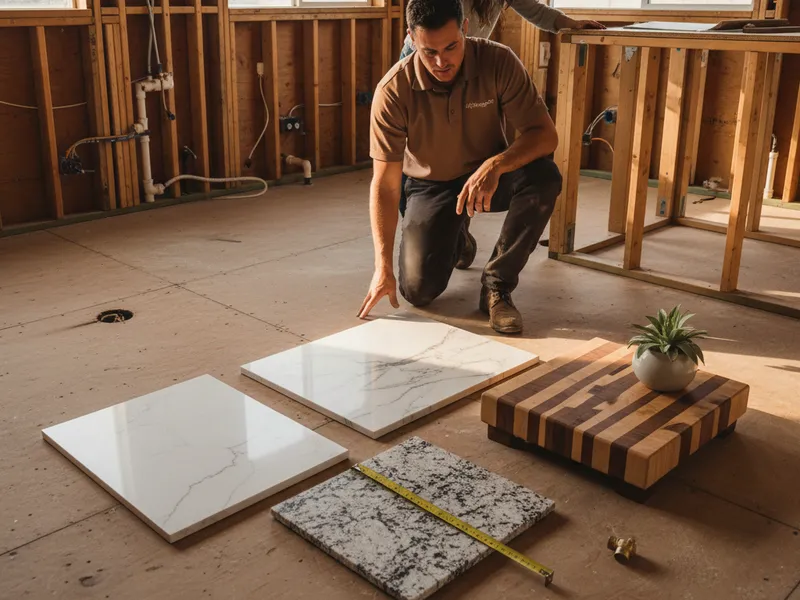
Choosing the right countertop material
The material you pick shapes how much upkeep the surface needs, how it handles heat and moisture, where the seams fall, and what the installed quote comes to. Look at samples in your own kitchen light, and rely on manufacturer instructions and itemized quotes instead of any one list of best surfaces.

Setting a budget for your kitchen remodel
A quote can fall short of the real cost when the written scope leaves out permits, labor, appliances, allowances, or conditions uncovered once demolition starts. An itemized quote you can compare side by side tells you more than one target number does.