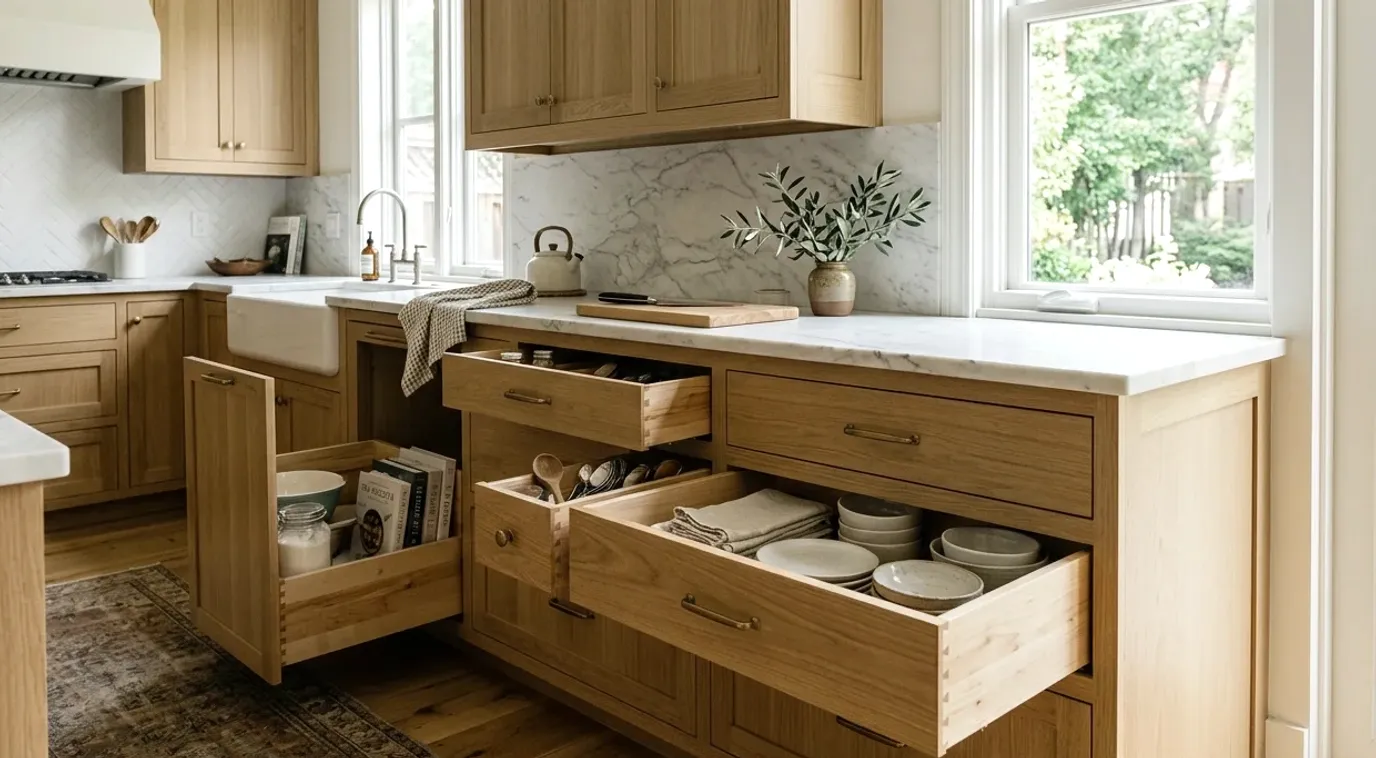
The boxes can be sound when the doors look tired. That is a common San Diego kitchen: the plywood case still holds a shelf, the doors are dinged, and the color belongs to a decade you are done with. Painting the boxes you keep is a finish decision. It is not a new kitchen, and it is not a promise that every old surface will take paint the same way.
Modern Kitchen San Diego does not paint cabinets, sell a coating, or price this work. You contract with an independent remodeler or a cabinet finisher. The notes below are what to inspect before that person writes a scope.
Keep the box only if the box is actually sound
Open every door and drawer. Press the cabinet bottom, the back, and the side near the hinge. A sound box feels stiff. A soft spot, a split seam, or a shelf pin hole that has blown out is a repair, not a color change.
Face-frame cabinets and frameless cabinets take paint on different edges. A face frame shows every ridge at eye level. A frameless box shows the front edge of the side panel.
If the doors are what you dislike and the boxes are square, painting can be the right conversation. If you still want the doors, finish the doors and the boxes together. The finisher needs a list of what stays, including the sink base and any tall pantry, and which openings change.
Grease at the range wall
The cabinets beside and above the range carry a film that soap does not always lift. It is cooking oil, airborne grease, and dust. Paint that goes over that film can peel in sheets a few months later, usually on the door next to the burner, where the heat is.
Stand at the range and look across the light, not straight on. A shiny smear on a clean stile is still grease. Check the inside of the door and the cabinet side toward the pan. A hood that never caught the smoke leaves film on the next cabinet too.
Ask the finisher what they use to cut that film, and whether the coating maker requires a named cleaner and a named primer. Do not treat a household degreaser as the spec. The product instructions decide the prep. If the same range stays in the same place, say so. Paint will not make a hot end panel cooler.
Hardware holes you already have
Old doors and old boxes remember every pull that ever lived there. Filled holes telegraph through paint if the fill is soft, proud, or a different color that the primer does not hide. A hole left open looks like a mistake, not a design choice.
Decide the hardware before the paint, not after. If you are keeping the doors and keeping the same hole spacing, the painter can work around those holes or pull the hardware and put it back. If you want a new pull that does not match the old holes, someone has to fill the old holes and drill the new ones. That drill happens on a finished door if you wait, and the fresh paint chips.
Write down which doors get knobs, which get pulls, and which false fronts stay empty. Particleboard that is already crumbling around an old hole will not hold a new screw without a repair. If hinges come off for paint, the finisher should label them. A hinge in the wrong cup is how a freshly painted door starts to rub.
Sheen near the sink
Sink-side doors and the face of the sink base take splash, soap, and a brighter light than the pantry. A flat paint that looks soft across the room can look blotchy next to a window over the sink. A high sheen shows every wave in the old face frame.
Look at the existing sheen before you pick a new one. If the sink doors are already dull while the pantry doors still shine, the coating has worn through in the splash zone. New paint needs a sound edge to grab. A worn bottom corner may need a repair, not another coat on top of bare composite.
Ask to see a sample on a scrap or on the inside of a door, in the same light as the sink window. Coastal kitchens in a marine layer and inland kitchens in hard afternoon sun do not show sheen the same way. A sample in the driveway is not the sample that matters.
Also look under the sink before anyone masks for paint. A damp bottom, a swollen toe-kick, or a door edge that is fat along the bottom means water is in the materials. Paint over that and you lock the moisture in. Fix the leak, let the box dry, and then talk about color. If the bottom stays swollen after the leak is gone, that part may need to be replaced. Paint will not press it flat.
Particleboard that swells when a sink leaks
Many sink bases and many drawer boxes are particleboard. It is stable when it stays dry and the faces stay sealed. A slow leak under the sink is enough to make the bottom swell, the edge band pop, and the screw holes widen. Once that happens, the panel does not return to its old thickness just because the puddle is gone.
Press the cabinet floor with a screwdriver handle, not a blade. If it gives, or if the surface is flaking, say so in the scope. A painter can coat a swollen panel. They cannot turn it back into a flat, strong bottom. The remodeler may replace the bottom, the end panel, or the whole sink base and paint the boxes that are still sound.
Do not confuse a swollen sink base with a door that needs paint. Replacing one box and painting the rest is a normal mixed scope. A drawer side that is fat or fuzzy can scrape after paint adds thickness. Ask which faces get coating and which stay bare.
What the scope should name
A useful scope names the boxes that stay, the doors that stay, and the parts that get replaced. It names the cleaner, the primer, and the topcoat, or it says those names will be in the spec before work starts. It says whether doors leave the house or get finished in place. It says who pulls the hardware, who fills holes, and who drills new ones.
It should also say how the kitchen is used while coatings cure. That window comes from the product, not from a county rule of thumb. Ask what “done” means: doors back on, hardware back, and hinges adjusted.
Paint after dusty demo, not before it, or plan on a careful clean. If new doors are shop-finished and old boxes are painted on site, compare samples in the kitchen light before both are final. The same color name can still look different on the wall.
Who you hire
You hire the person who will do the work, and you sign with them. Check a contractor license at cslb.ca.gov when the work is construction that requires one. A paint-only visit and a remodel that also moves the sink are not the same contract. Ask which one you are signing.
Modern Kitchen San Diego is a referral service. It does not employ a paint crew and it does not warrant a coating. If the boxes are worth keeping and you want an independent remodeler to sort paint, repairs, and any door replacement in one scope, the service can try to match you with one. The price and the warranty, if any, come from that remodeler, not from this site.